
Retrospective
Two Disciplinary Commons, five years apart.
I took part in two Disciplinary Commons cohorts, first with the A1J Software Design module in 2005–06 and later with the P3X Final Year Project in 2010–11. This page preserves the story of those course portfolios and the two papers produced with fellow participants.
What is a Disciplinary Commons?
The Disciplinary Commons model was created in 2005 by Sally Fincher (University of Kent) and Josh Tenenberg (University of Washington Tacoma), who each ran a first instantiation, Fincher's in the UK and Tenenberg's in the United States. A Disciplinary Commons brings together a group of teachers from different institutions, all teaching within the same subject area, who meet regularly over an academic year to share, reflect on and document their teaching practice.
Each participant builds a course portfolio describing their own teaching of a particular module, covering its context, content, instructional design, delivery, assessment and evaluation. Portfolios are read and critiqued by the rest of the group, and participants visit one another's classrooms. The stated goals of the original project were to document and share knowledge about teaching and student learning on introductory programming courses, and to establish a scholarship of teaching that is public, peer-reviewed and open for other educators to use and build on.
I took part in two separate Disciplinary Commons cohorts, each producing a full course portfolio hosted on a dedicated Moodle site at commons.thomaslancaster.co.uk. That site is now being retired, so this page preserves its story and its illustrations, with the underlying content kept safely in archive.
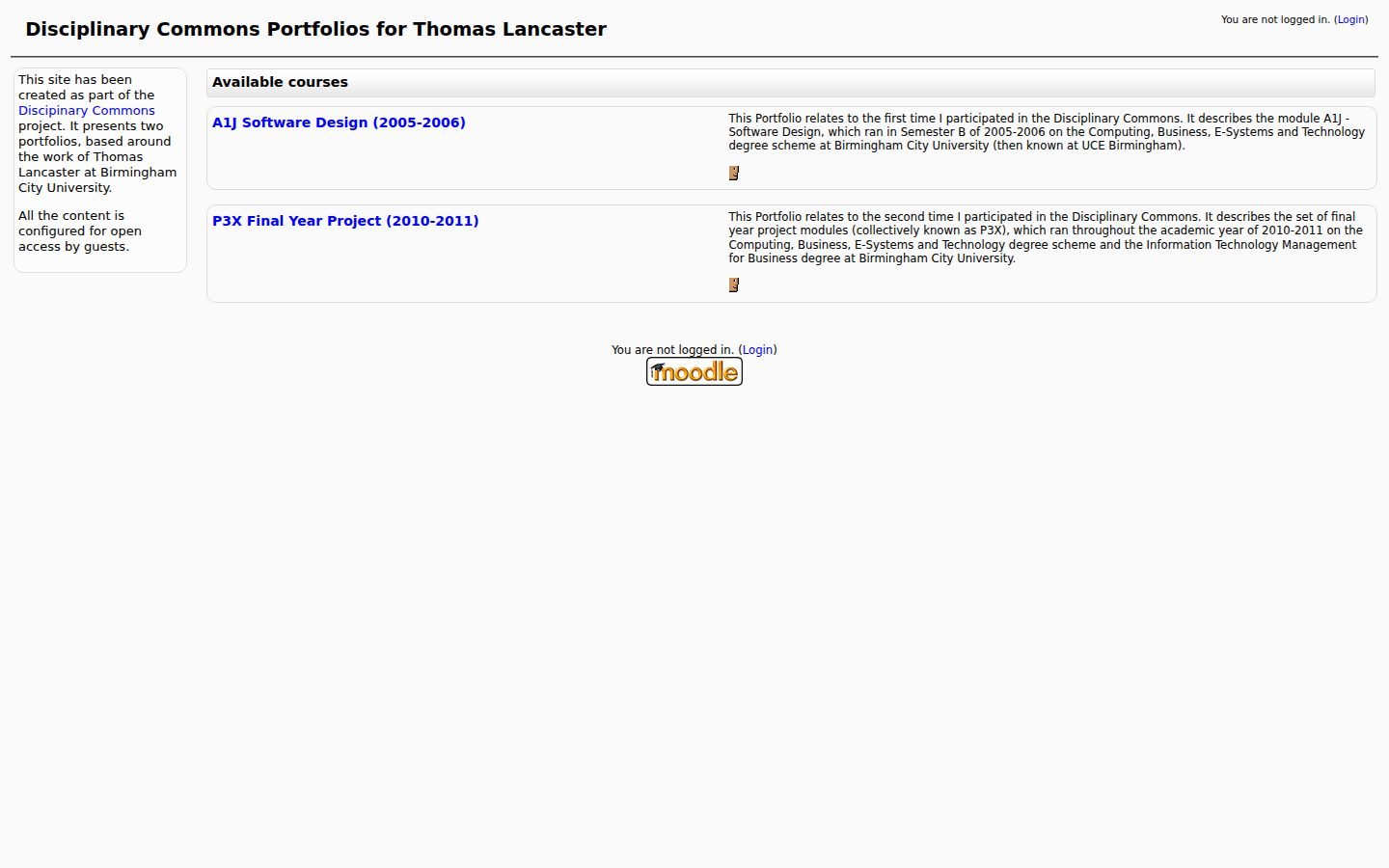
2005-06
A1J: Software Design
UCE Birmingham (now Birmingham City University). My first Disciplinary Commons, focused on an introductory Java programming module.
2010-11
P3X: Final Year Project
Birmingham City University. My second Disciplinary Commons, this time focused on supervising final year student projects.
The first commons: A1J Software Design, 2005-06
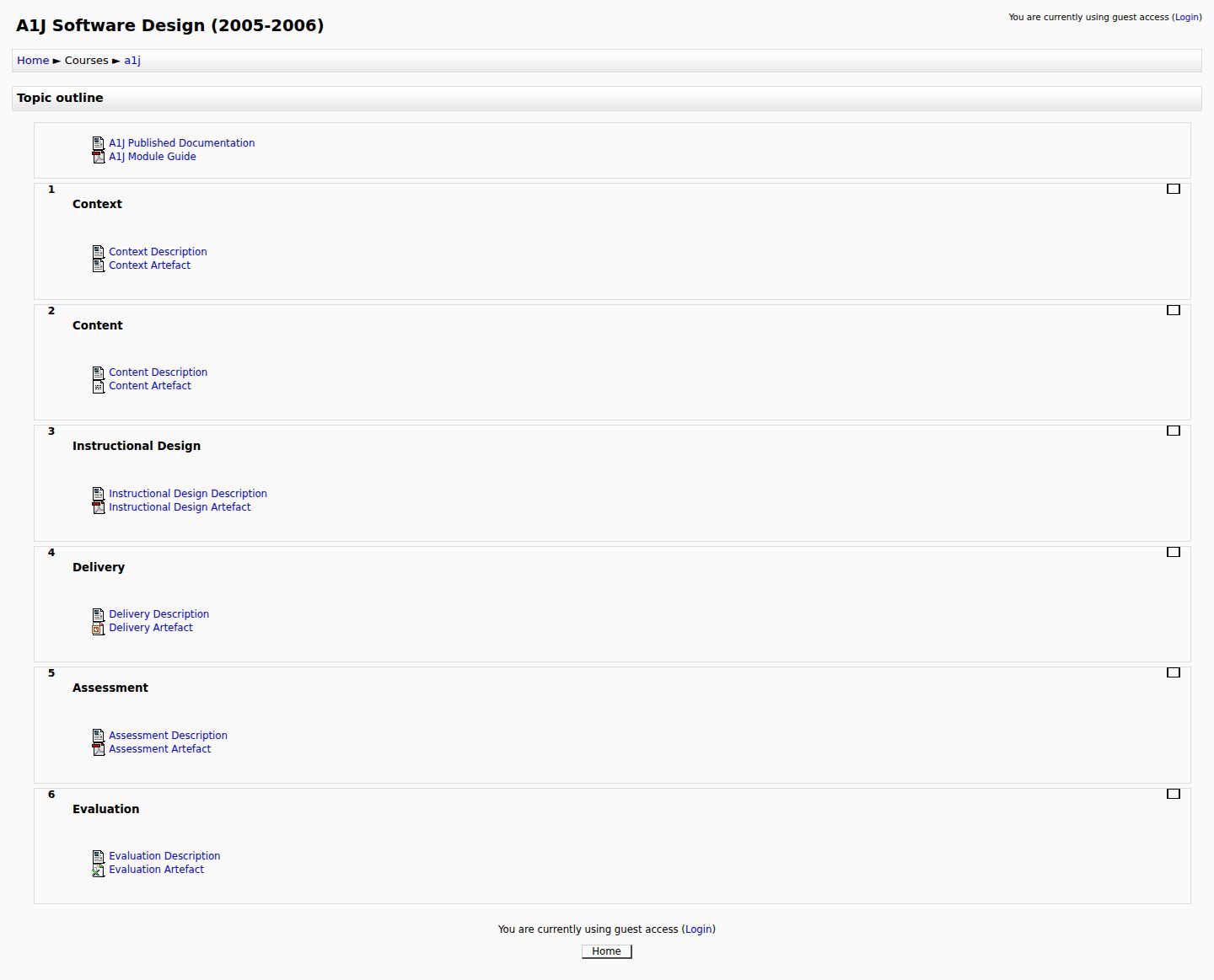
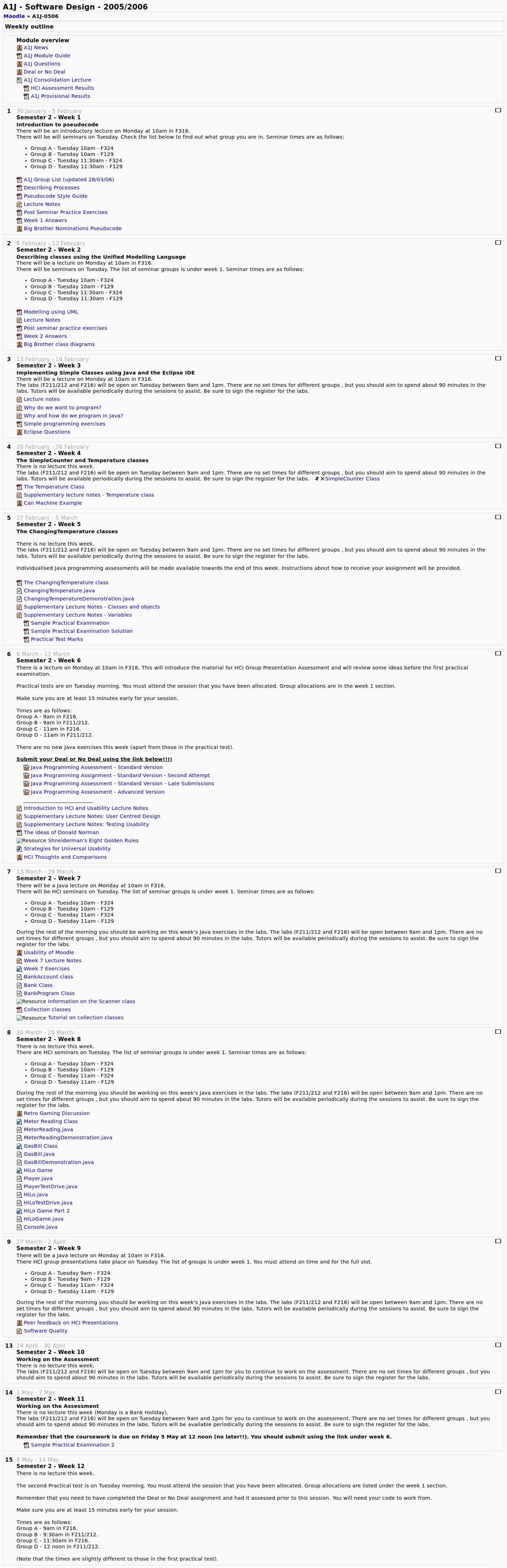
This portfolio related to the first time I participated in the Disciplinary Commons. It described A1J - Software Design, a 24-credit module I ran in Semester B of 2005-06 on the Computing, Business, e-Systems and Technology degree scheme at what was then UCE Birmingham (later Birmingham City University). It was the first year I had been in charge of the module, teaching around 160 students, and the portfolio was frank about the scale of that task.
"For a module of around 160 students this is a daunting task as there is a heavy teaching load on the module."
The module introduced students to object-oriented design and Java programming through Eclipse, working through pseudocode, UML class diagrams and a series of small classes before a main assignment: a console-based simulation of "Deal or No Deal". That assignment was individualised for every student, both to let stronger students go further with an advanced version and, as the portfolio put it, to make it harder for students to collude or to pay someone else to do the work, an early sign of the interest in academic integrity that later became my main research field.
Much of the teaching approach, and a good deal of the lecture material, was adapted with permission from London South Bank University, where I had previously taught under Professor Fintan Culwin. The portfolio's evaluation was candid about what worked and what did not, and set out changes planned for the following year, including a move to the BlueJ development environment and a rebalancing of software development and human-computer interaction content.
The second commons: P3X Final Year Project, 2010-11
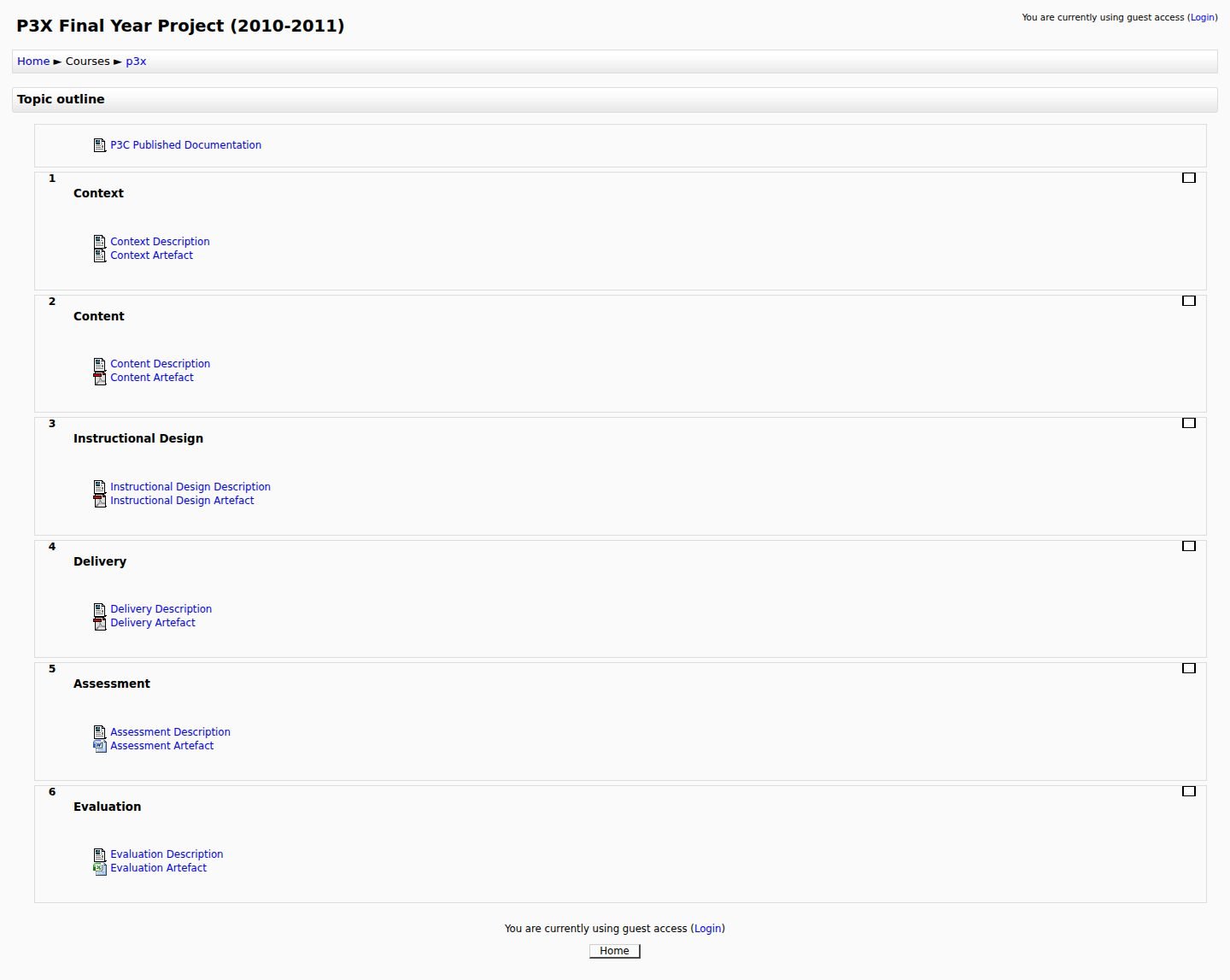
Five years on, I joined a second Disciplinary Commons, this time built around final year project supervision rather than a single taught module. This portfolio described the set of final year project modules collectively known as P3X, which ran throughout 2010-11 on the Computing, Business, e-Systems and Technology degree scheme and the Information Technology Management for Business degree at Birmingham City University.
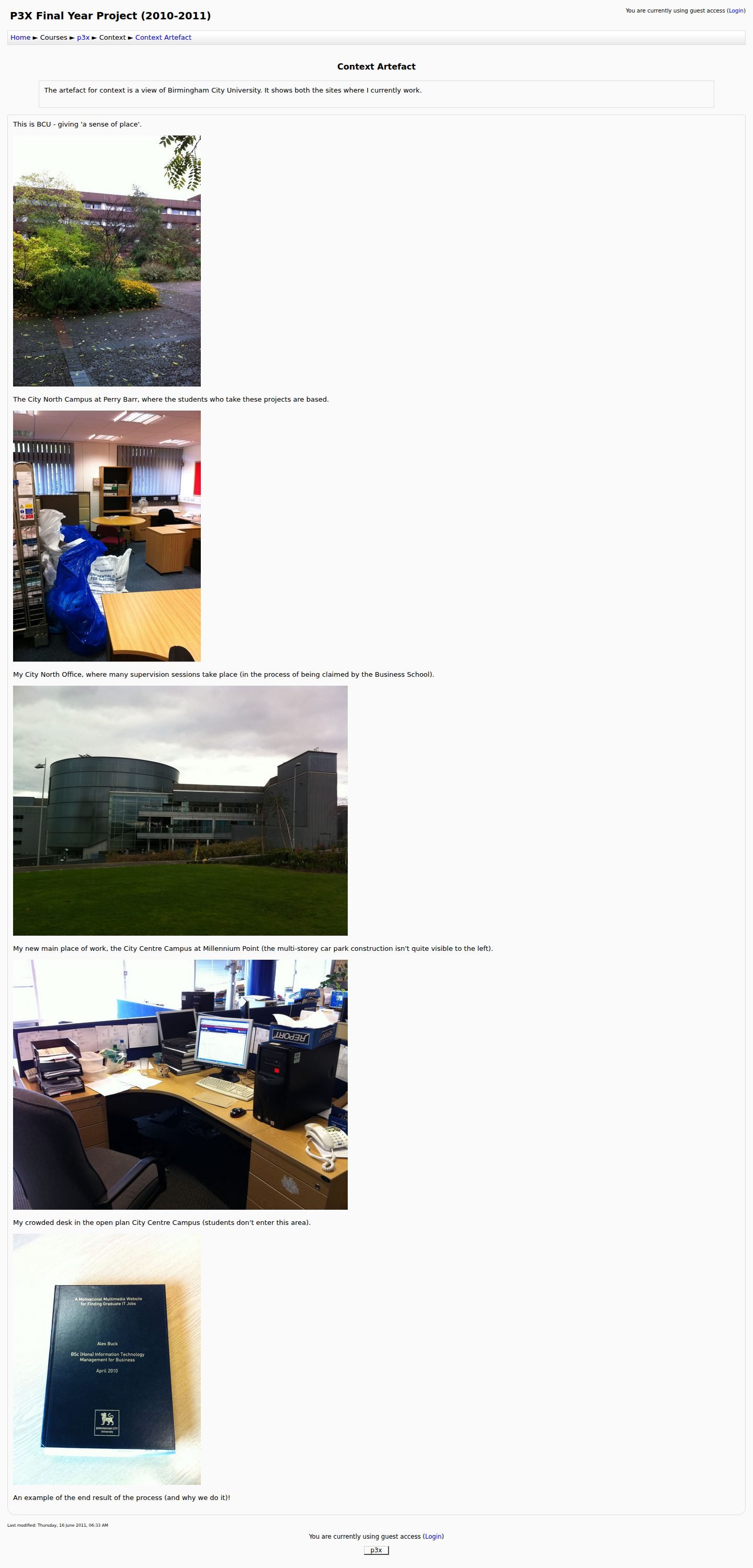
By this point the university was operating across two campuses, City North at Perry Barr, where the project students were based, and the City Centre campus at Millennium Point, my main place of work. Students were allocated to one of six project routes, including Software Engineering, Computing, Multimedia, Networking and Business Information Technology, and were expected to produce a hardbound report of around 10,000 words documenting how they researched, designed, developed and evaluated a solution to a practical problem.
"Many students produce excellent project work which is a credit to them, although some struggle with either the research ideas or the areas of technical complexity."
The portfolio set out five project milestones across the year, from an initial project selection form through to the final report, weekly supervision built around a printed actions form, and a marking scheme weighted across project management, analytical skills, synthesis skills and critical appraisal.
What the portfolios contained
Both portfolios followed the same structure, prescribed by the Disciplinary Commons framework, so that portfolios from different institutions and subjects could still be compared and critiqued by the group. Each was built from six sections:
- Context - the institution, department and student population, with a photographic artefact giving "a sense of place".
- Content - what was taught, and why, including the constraints on what could be covered.
- Instructional design - the reasoning behind how the module or project was structured.
- Delivery - the lectures, seminars, labs and supervision through which the module reached students.
- Assessment - how student work was set, individualised where relevant, and marked.
- Evaluation - a candid look at what worked, what did not, and what would change next time.
Each section paired a short piece of written reflection with a supporting artefact, ranging from module guides and marking schemes to anonymised results and sample assignments, all held on the Moodle site with open guest access for anyone reviewing the portfolio.
Publications from this work
Both Disciplinary Commons cohorts produced a joint conference paper, written with the wider group of participants, summarising the good ideas that had emerged across all the portfolios.
Some Good Ideas from the Disciplinary Commons
Fincher, S., Barnes, D., Bibby, P., Bown, J., Bush, V., Campbell, P., Cutts, Q., Jamieson, S., Jenkins, T., Jones, M., Kazakov, D., Lancaster, T., Ratcliffe, M., Seisenberger, M., Shinners-Kennedy, D., Wagstaff, C., White, L. and Whyley, C. (2006) 'Some Good Ideas from the Disciplinary Commons', Proceedings of the 7th Annual Conference of the Higher Education Academy for Information and Computer Sciences, Dublin, Ireland, pp. 153-158.
Some Good Ideas For Student Projects From The Disciplinary Commons
Lancaster, T., Jenkins, T., Barroca, L., Calvert, M., Devlin, S., Foley, R., Horton, J., Moore, J. and Sturdy, P. (2011) 'Some Good Ideas For Student Projects From The Disciplinary Commons', Proceedings of the 12th Annual Conference of the Higher Education Academy Subject Centre for Information and Computer Sciences, University of Ulster, Belfast Campus, 23-25 August 2011.
A preserved archive
The underlying portfolio material has been retained in the migration archive, and this page brings the story and illustrations forward. If you have questions about either commons or the papers that came from them, get in touch.